Why Yoga and TCM Meditation Changed My Health Standards Forever
For years, I chased quick fixes—detox teas, intense workouts, miracle supplements. Nothing lasted. Then I discovered the quiet power of yoga and Traditional Chinese Medicine (TCM) meditation. Not just relaxation, but a total reset. My energy stabilized, sleep deepened, and my body finally felt balanced. This isn’t about perfection—it’s about real, sustainable wellness. Here’s how blending ancient practices raised my health standards in ways I never expected.
The Breaking Point: When Modern Wellness Failed Me
There was a time when my idea of health revolved around speed and intensity. I believed that if I wasn’t drenched in sweat after a 6 a.m. spin class or drinking green juice from a mason jar, I wasn’t doing enough. I followed every trend—keto, intermittent fasting, cold plunges, and even experimented with over-the-counter energy boosters just to make it through the workday. Despite the effort, I felt increasingly drained, emotionally frayed, and physically unwell. My sleep was shallow, my digestion erratic, and my mood swung unpredictably. I was doing everything 'right' by modern wellness standards, yet I was further from balance than ever.
The turning point came during a routine doctor’s visit. After running tests, my physician confirmed what I already sensed: no single condition explained my fatigue, but chronic stress and lifestyle imbalance were taking a toll. There were no prescriptions, only advice to slow down and prioritize rest—something that felt almost radical in a culture that glorifies busyness. It was then that I began to question the foundation of my health beliefs. I realized that modern wellness often focuses on surface-level fixes: appearance, performance, and rapid results. What it rarely addresses is the deeper layer—internal harmony, resilience, and the body’s natural rhythms.
This gap led me to explore alternative traditions. I started reading about holistic systems that viewed health not as the absence of disease but as a state of dynamic equilibrium. Among these, Traditional Chinese Medicine stood out for its comprehensive understanding of energy, emotion, and physiology. Unlike symptom-based approaches, TCM considers the whole person—body, mind, and environment. Around the same time, a friend invited me to a gentle yoga class focused on breath and stillness rather than flexibility or endurance. That experience opened a door I hadn’t known existed. For the first time in years, I felt present in my body, not at war with it.
Roots of Balance: Understanding Traditional Chinese Medicine Basics
Traditional Chinese Medicine is a healing system with roots stretching back thousands of years, grounded in observation, pattern recognition, and natural law. At its core is the concept of Qi (pronounced “chee”), the vital energy that flows through the body along pathways known as meridians. When Qi moves freely and is in balance, health thrives. When it becomes blocked, deficient, or excessive, discomfort or illness may arise. Rather than isolating symptoms, TCM seeks to understand the underlying patterns that disrupt this flow, treating the person, not just the problem.
Central to TCM philosophy is the principle of Yin and Yang—two complementary forces that exist in all aspects of life. Yin represents receptivity, coolness, and stillness; Yang embodies activity, warmth, and movement. Health is not about maximizing one over the other but maintaining their dynamic interplay. For example, too much Yang—such as overwork, intense exercise, or excessive screen time—can deplete Yin, leading to restlessness, insomnia, or dryness in the body. Conversely, too much Yin—like prolonged inactivity or emotional stagnation—can result in fatigue, heaviness, or low motivation. True wellness, according to TCM, arises from adjusting daily habits to support this balance based on individual needs and seasonal changes.
Another key framework in TCM is the Five Elements—Wood, Fire, Earth, Metal, and Water—each associated with specific organs, emotions, and phases of life. Wood relates to the liver and gallbladder, linked with planning and anger; Fire governs the heart and small intestine, tied to joy and connection; Earth corresponds to the spleen and stomach, connected to nourishment and worry; Metal involves the lungs and large intestine, associated with letting go and grief; Water represents the kidneys and bladder, linked to willpower and fear. These elements interact in cycles of creation and control, forming a living map of how physical and emotional health are intertwined. When one element is out of rhythm, it can affect the entire system.
This holistic lens reshaped how I viewed my own health. Instead of asking, 'What’s wrong with me?' I began to ask, 'What pattern is emerging?' Was I overextending myself (excess Yang)? Was I holding onto stress (liver Qi stagnation)? Was my digestion sluggish because I was eating on the go (Earth element imbalance)? TCM didn’t offer quick fixes, but it gave me a language to understand my body’s signals. It emphasized prevention, awareness, and rhythm—values that aligned with a slower, more sustainable approach to well-being.
Yoga Beyond Stretching: A Moving Meditation for Energetic Flow
My initial exposure to yoga was limited to images of advanced poses on social media—contorted bodies in perfect alignment, often used to sell fitness gear or lifestyle ideals. I assumed yoga was for the flexible, the young, or those with hours to dedicate each day. What I didn’t realize was that authentic yoga is not about how far you can stretch, but how deeply you can feel. It is, at its essence, a practice of presence—uniting breath, movement, and awareness to create internal harmony.
As I explored different styles, I gravitated toward slower, breath-centered forms like Hatha and Yin yoga. These practices emphasized stillness, alignment, and mindful transition between postures. I learned that each movement could be synchronized with inhalation or exhalation, turning physical activity into a form of moving meditation. This coordination activates the parasympathetic nervous system, signaling the body to shift from 'fight or flight' mode to 'rest and digest'—a state where healing and regulation can occur. Over time, I noticed subtle but significant changes: my breathing became deeper, my shoulders relaxed, and my mind grew quieter even outside of practice.
What deepened my appreciation for yoga was discovering its resonance with TCM principles. Many yoga postures gently compress or stretch areas of the body that correspond to major meridian pathways. For example, forward bends influence the kidney and bladder meridians (Water element), while twists stimulate the liver and gallbladder (Wood element). Backbends open the heart and lung channels (Fire and Metal), and hip openers release tension in the pelvic region, where several meridians converge. While yoga does not claim to 'cure' imbalances, consistent practice can support the smooth flow of energy, reduce stagnation, and promote a sense of lightness and clarity.
Perhaps the most transformative aspect of yoga was its invitation to listen. In a world that constantly pulls attention outward—notifications, deadlines, expectations—yoga created space to turn inward. I began to notice sensations I had long ignored: tightness in the jaw, a hollow feeling in the stomach, warmth spreading through the chest after a deep breath. These cues became part of a dialogue with my body, teaching me to respond with care rather than override with willpower. Yoga, I realized, was not a workout—it was a daily act of tuning in, a way to honor the body’s rhythms rather than push past them.
Merging Two Worlds: How Yoga and TCM Meditation Complement Each Other
While both yoga and TCM meditation are powerful on their own, their true strength lies in their synergy. Yoga prepares the body for stillness, releasing physical tension that can block mental clarity. TCM meditation, in turn, deepens the awareness cultivated on the mat, guiding attention to the subtle movements of energy and emotion within. Together, they form a complementary cycle—movement to open, stillness to integrate.
One of the most meaningful integrations I discovered was aligning my practice with the body’s natural rhythms. TCM teaches that energy flows through different organ systems at specific times of day. For instance, the liver is most active between 1 a.m. and 3 a.m., making it a critical time for rest and detoxification. The heart governs the period from 11 a.m. to 1 p.m., ideal for light activity and social connection. By structuring my yoga and meditation around these cycles, I began to honor my body’s innate timing. A gentle morning sequence supports the large intestine’s role in elimination, while an evening seated meditation helps the kidneys store essence for deep rest.
Seasonal awareness also became part of my routine. In TCM, each season corresponds to an element and organ system: spring (Wood/liver), summer (Fire/heart), late summer (Earth/spleen), autumn (Metal/lungs), and winter (Water/kidneys). During spring, I incorporated more dynamic, flowing movements to support liver Qi and release stored tension. In winter, I shifted to restorative poses and longer meditations to conserve energy and nourish the kidneys. This seasonal attunement helped me move with nature rather than against it, reducing the sense of constant struggle.
Another powerful overlap is the recognition of emotional-physical connections. TCM identifies specific emotions linked to each organ: anger with the liver, joy with the heart, worry with the spleen, grief with the lungs, and fear with the kidneys. Yoga provides a safe container to process these emotions through breath and posture. Holding a heart-opening backbend might bring unexpected tears; a deep hip release could surface buried frustration. Rather than suppressing these responses, I learned to allow them—acknowledging that emotional release is part of physical healing. This integration helped me move beyond seeing health as purely mechanical and embrace it as a living, responsive process.
My Daily Rhythm: A Real Routine That Actually Works
Building a sustainable practice didn’t happen overnight. I started small—five minutes of breath awareness in bed before rising. Over time, this grew into a structured yet flexible daily rhythm that adapts to my energy levels and responsibilities. The key wasn’t perfection, but consistency. I stopped measuring success by duration or intensity and began valuing presence and intention.
My morning routine begins with a few minutes of Qi-gong-inspired movements: gentle neck rolls, shoulder lifts, and waist twists to awaken the meridians. I follow this with a short yoga sequence—cat-cow stretches, forward folds, and a few minutes of standing balance poses. The focus is on connecting breath with motion, not achieving perfect form. This 15- to 20-minute practice sets a calm tone for the day, improving circulation and mental clarity without depleting energy.
Throughout the day, I incorporate micro-practices. When stress builds, I pause for a breath reset: four counts in, six counts out, repeated for one to two minutes. This simple technique activates the vagus nerve, slowing the heart rate and calming the nervous system. I also take short walks after meals, aligning with TCM’s emphasis on supporting spleen and stomach function through light movement. These small habits accumulate, creating a foundation of regulation that prevents burnout.
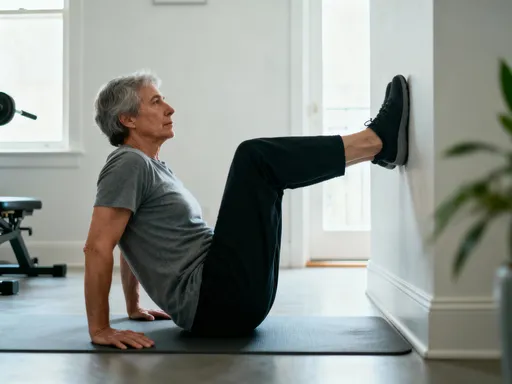
In the evening, I transition into stillness. After putting the house in order, I sit in a comfortable position for 10 to 20 minutes of seated meditation. I focus on the breath, observe thoughts without attachment, and occasionally scan the body for areas of tension. This is often followed by a few gentle asanas—legs-up-the-wall, child’s pose, or a supported forward bend—to release residual stress. I dim the lights, avoid screens, and sometimes use a warm eye pillow to signal to my body that it’s time to wind down. This ritual has transformed my sleep quality, allowing me to fall asleep faster and wake feeling more refreshed.
Flexibility remains essential. On days when I’m exhausted, I skip the full routine and simply lie down for a five-minute body scan. On busy mornings, I shorten the sequence but never skip breath awareness entirely. The practice evolves with my needs, not against them. This adaptability has made it sustainable—something I return to not out of obligation, but because I feel the difference when I don’t.
Beyond the Mat: How This Practice Reshaped My Lifestyle Standards
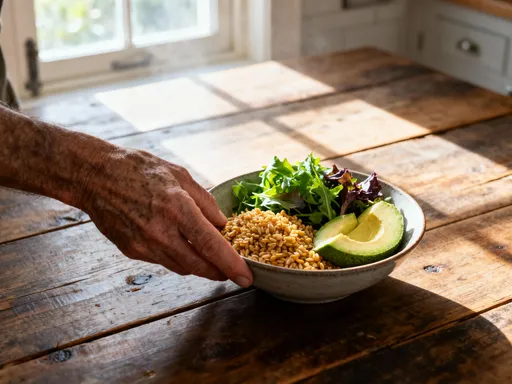
The most surprising outcome of integrating yoga and TCM meditation has been its ripple effect on other areas of life. I didn’t set out to overhaul my habits, but as my internal state shifted, my choices naturally followed. I began to crave nourishing foods—not out of restriction, but because my body felt more attuned to what it needed. I noticed that heavy, greasy meals left me sluggish, while warm, cooked foods supported digestion and energy. I started eating more mindfully, chewing slowly, and honoring hunger and fullness cues.
Sleep, once a battleground, became a priority. I stopped viewing rest as wasted time and began to see it as essential maintenance. I established a consistent bedtime, reduced evening screen exposure, and created a calming pre-sleep routine. As my sleep deepened, my mood stabilized, and my ability to handle daily stress improved. I became less reactive—able to pause before responding to a frustrating email or a family disagreement. This emotional resilience wasn’t forced; it emerged from a calmer nervous system and greater self-awareness.
At work, I learned to recognize the signs of depletion—tight shoulders, shallow breathing, mental fog—and respond with small resets. I scheduled short breaks, stepped outside for fresh air, and practiced breathwork at my desk. I became more productive not by doing more, but by working in alignment with my energy. I also set clearer boundaries, saying no to commitments that drained me and protecting time for rest and family. These changes weren’t drastic, but they added up to a more balanced, intentional life.
Perhaps the deepest shift was in how I define wellness. It’s no longer about achieving a certain look or hitting performance goals. It’s about feeling grounded, resilient, and connected to my body’s wisdom. It’s about creating a life that supports health, not one that requires constant fixing. This internal compass guides my choices—not through rigid rules, but through listening, responding, and adjusting with kindness.
Science Meets Tradition: What Research Says About Mind-Body Harmony
While the benefits of yoga and meditation have been recognized for centuries in traditional systems, modern science now offers evidence that supports their impact on health. Research has shown that regular meditation can improve heart rate variability (HRV), a key indicator of nervous system resilience. Higher HRV is associated with better stress adaptation, emotional regulation, and cardiovascular health. Mindfulness practices have also been linked to reduced activity in the amygdala, the brain’s fear center, leading to decreased anxiety and improved mood.
Studies on yoga demonstrate its ability to lower cortisol, the primary stress hormone. Chronic elevation of cortisol is associated with weight gain, impaired immunity, and sleep disturbances. Controlled trials have found that participants who practiced yoga regularly experienced significant reductions in cortisol levels, along with improvements in perceived stress and overall well-being. Additionally, yoga has been shown to enhance flexibility, balance, and muscle strength—benefits that support healthy aging and injury prevention.
Neuroimaging studies reveal that long-term meditation can increase gray matter density in brain regions related to learning, memory, and emotional control. These structural changes suggest that mind-body practices don’t just offer temporary relief—they can reshape the brain over time. Furthermore, research on breathwork, a core component of both yoga and TCM meditation, shows that slow, diaphragmatic breathing activates the parasympathetic nervous system, reducing blood pressure and promoting relaxation.
It’s important to note that science does not 'prove' traditional systems right, nor should it replace their wisdom. Rather, research offers a complementary perspective—one that validates the lived experience of millions who have benefited from these practices. The value of yoga and TCM meditation lies not in isolated mechanisms, but in their holistic approach to human health. They remind us that well-being is not a destination, but a continuous process of alignment, awareness, and care.
This journey wasn’t about achieving flawless health, but redefining what wellness means—slower, deeper, and more connected. By integrating yoga and TCM meditation, I didn’t just feel better; I learned to listen to my body’s true needs. It’s not a trend. It’s a lifelong standard worth keeping.