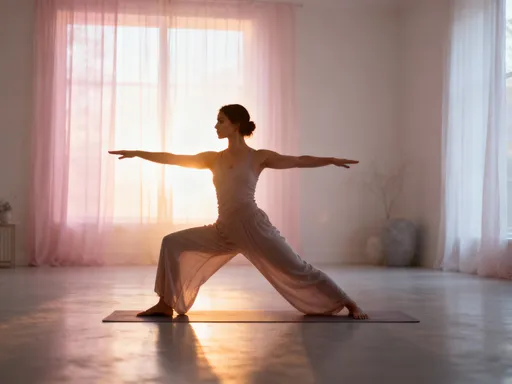
How I Found Calm in Chaos: My Beginner Journey with Yoga and TCM-Inspired Movement
I used to think meditation meant sitting perfectly still for hours—nope, not me. As someone overwhelmed by stress and new to wellness, I needed something gentle, real, and doable. That’s when I blended simple yoga movements with traditional Chinese medicine (TCM) principles like energy flow and body awareness. No fancy poses, no pressure. Just daily moments that made a difference. This is the beginner-friendly routine that actually helped me feel more balanced—naturally.
The Overwhelmed Beginner: Why I Needed a Different Approach to Wellness
Many people begin wellness journeys hoping for immediate relief from stress, better sleep, or more energy—only to feel defeated when results don’t appear overnight. I was one of them. My first attempts at yoga left me sore, frustrated, and convinced I wasn’t flexible enough, strong enough, or calm enough to “do it right.” I associated wellness with achievement: mastering a difficult pose, meditating for 20 minutes without distraction, or following a strict routine. But life as a busy adult—with responsibilities, fluctuating energy levels, and emotional ups and downs—doesn’t always allow for perfection.
What I didn’t realize then was that my struggle wasn’t with yoga itself, but with the mindset I brought to it. Western fitness culture often emphasizes intensity, performance, and visible results. We’re taught to push through discomfort, set goals, and measure progress in clear metrics. While this approach works for some, it can backfire for beginners, especially those already dealing with chronic stress or physical tension. For me, pushing harder only increased my sense of failure. My shoulders stayed tight, my mind raced, and I felt further from peace than when I started.
It wasn’t until I discovered the principles of traditional Chinese medicine (TCM) that I began to shift my perspective. TCM views health not as a state of constant peak performance, but as a dynamic balance between opposing forces—like activity and rest, movement and stillness, warmth and coolness. Instead of asking how much I could do, I began asking how I felt. Instead of forcing my body into shapes, I started exploring how to move with greater awareness and gentleness. This subtle but powerful change—from striving to listening—became the foundation of my practice.
Wellness, I learned, isn’t about conquering the body. It’s about restoring harmony. In TCM, imbalance is seen as the root of discomfort, whether physical or emotional. When energy—known as Qi—flows smoothly through the body’s pathways, we feel more resilient, calm, and grounded. When it’s blocked or stagnant, we may experience tension, fatigue, or mood swings. The goal isn’t to eliminate discomfort completely, but to respond with care rather than force. This understanding allowed me to let go of perfection and embrace a slower, more intuitive way of moving.
Bridging Two Worlds: Understanding the Shared Ground Between Yoga and TCM
At first glance, yoga and traditional Chinese medicine may seem like entirely different systems—one from India, the other from China, with distinct philosophies and practices. But when I looked deeper, I found surprising parallels. Both emphasize the connection between breath, movement, and inner balance. Both view the body not as a machine to be fixed, but as a living system that thrives on rhythm, flow, and awareness. And both recognize that mental and physical well-being are deeply intertwined.
In yoga, the concept of prana refers to life force energy that flows through channels called nadis. In TCM, Qi travels along pathways known as meridians. While the names and maps differ, the underlying idea is similar: when energy moves freely, we feel vital and clear; when it’s blocked, we feel sluggish or tense. Practices like gentle stretching, mindful breathing, and meditative movement are designed not to build muscle or burn calories, but to support this natural flow. They help release tension, improve circulation, and calm the nervous system—without making medical claims or promising cures.
Another shared principle is the importance of balance. In TCM, health is maintained through the dynamic interplay of Yin and Yang—opposing yet complementary forces. Yin represents stillness, receptivity, and nourishment; Yang stands for action, warmth, and movement. Too much Yang can lead to burnout; too much Yin may result in lethargy. Similarly, in yoga, we balance active (Yang) postures with restorative (Yin) ones. A healthy practice includes both effort and ease, strength and softness, movement and stillness.
What resonated with me most was the emphasis on rhythm over resistance. In both systems, progress isn’t measured by how far you can stretch or how long you can hold a pose, but by how well you listen to your body. The goal isn’t to force change, but to create conditions where healing and balance can occur naturally. This doesn’t mean avoiding challenge altogether, but approaching it with awareness and respect. For example, a gentle forward bend done with relaxed breath and attention may do more for energy flow than a deep, strained version done out of habit or comparison.
By integrating these ideas, I began to see my practice not as a workout, but as a daily ritual of self-care. It wasn’t about becoming someone else or achieving a certain look. It was about showing up for myself, exactly as I was, and offering kindness through movement and breath.
My First Simple Routine: A 10-Minute Daily Practice That Actually Stuck
Knowing the theory was one thing; building a habit was another. I needed a routine that fit into real life—something short, simple, and sustainable. I didn’t have time for hour-long sessions or complex sequences. What I needed was consistency, not intensity. So I designed a 10-minute morning practice that required no special equipment, no prior experience, and no pressure to perform.
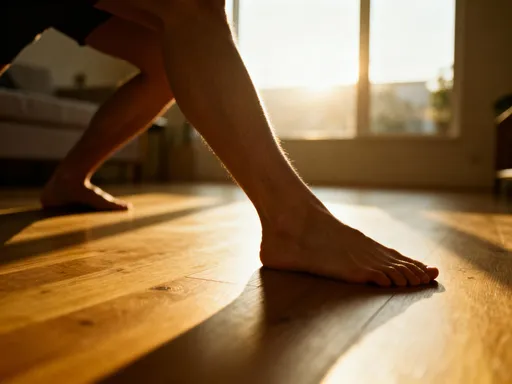
It began with something I could do even before getting out of bed: wiggling my toes. In TCM, the feet are considered a microcosm of the whole body, with reflex points linked to organs and energy pathways. Waking up the feet gently signals the body that a new day has begun. From there, I moved to slow neck rolls—half circles to the right, then to the left—releasing tension that often builds from looking at screens or holding stress in the shoulders. Each movement was small, deliberate, and pain-free.
Next came shoulder rolls—forward and backward—to loosen the upper back and improve posture. I followed this with Cat-Cow, a gentle spinal wave performed on hands and knees. Inhaling into Cow pose, lifting the chest and tailbone; exhaling into Cat, rounding the spine and tucking the chin. This simple flow helps mobilize the spine, encourages deep breathing, and stimulates the flow of Qi along the back. I did five rounds, syncing breath with movement, never rushing.
Then, I settled into Child’s Pose, a resting posture that gently stretches the hips, thighs, and lower back. I placed a pillow under my forehead for support and stayed for five deep breaths, focusing on the rise and fall of my abdomen. This was my moment of grounding—physically and mentally. From there, I moved to a seated forward bend, sitting on the edge of a cushion to tilt the pelvis forward and make the stretch more accessible. I didn’t try to touch my toes; I simply leaned forward as far as felt comfortable, keeping the spine long and the breath steady.
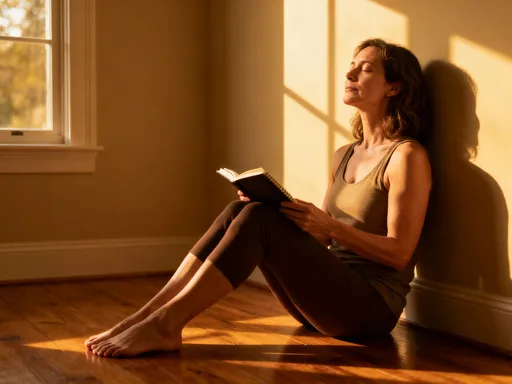
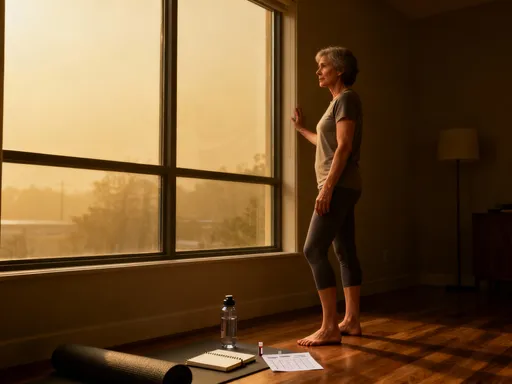
What made this routine work wasn’t the complexity of the movements, but the consistency of the practice. I did it every morning, usually facing a window, letting natural light and the rhythm of sunrise anchor me. I didn’t worry about doing it perfectly. Some days, I skipped a step or shortened the time. But showing up—even for five minutes—was enough. Over time, those small moments added up. I began to notice subtle shifts: less stiffness, more clarity, a quieter mind. The routine became less about the poses and more about the pause—a daily invitation to reconnect.
Listening to My Body: Learning the TCM Way of Self-Awareness
One of the most transformative lessons I learned from TCM is that the body speaks—if we’re willing to listen. In modern life, we’re often encouraged to ignore physical signals: push through fatigue, power past discomfort, or numb stress with distractions. But TCM teaches that symptoms like tight muscles, low energy, or trouble sleeping are not just inconveniences—they’re messages. They indicate where energy may be blocked or where balance is needed.
At first, I didn’t know how to interpret these signals. I’d feel stiffness in my neck and assume it was just from poor posture. But as I practiced mindfulness, I began to notice patterns. On days when I felt emotionally overwhelmed, my shoulders would tighten. When I hadn’t slept well, my lower back felt heavy. Instead of treating these sensations as problems to fix, I started seeing them as invitations to adjust. Some mornings, I needed more movement; others, I needed stillness. Some days, I craved deep stretches; other days, I simply sat and breathed.
This shift—from forcing to feeling—changed everything. I stopped measuring my practice by how many poses I completed or how flexible I became. Instead, I asked: How do I feel today? What does my body need? Sometimes, the answer was a full 10-minute routine. Other times, it was three minutes of deep breathing or a few gentle neck rolls at my desk. The key was responsiveness, not rigidity.
TCM emphasizes that each person has a unique constitution and energy pattern. What works for one may not work for another. There’s no universal “best” routine—only what supports your current state. This understanding freed me from comparison. I didn’t need to look like a yoga instructor or follow the latest trend. I just needed to honor my own rhythm. Over time, this practice of self-awareness extended beyond movement. I began to notice how food, sleep, and even my environment affected my energy. I made small adjustments—drinking warm water in the morning, taking short walks after meals, reducing screen time before bed—and saw how they supported overall balance.
Breathing Like Water: The Underrated Power of Soft, Rhythmic Breath
I didn’t realize how shallow my breathing had become until I paused to notice. Most of the time, I was breathing high in my chest—quick, tight breaths that matched my anxious thoughts. I didn’t know I was doing it until I tried slow, deep breathing and felt how unnatural it felt at first. But with practice, I learned to breathe from my diaphragm, letting my belly rise on the inhale and fall on the exhale. This type of breathing activates the parasympathetic nervous system, which helps the body relax and recover.
In both yoga and TCM, breath is considered a bridge between the mind and body. It’s the one function we can control consciously, yet it also operates automatically. By changing our breath, we can influence our state of mind. A rapid, shallow breath tends to increase alertness and anxiety; a slow, deep breath promotes calm and clarity. I didn’t need medication or expensive tools—just my own breath.
I started with a simple technique: inhaling through the nose for a count of four, holding gently for two, exhaling for six. The longer exhale helps signal safety to the brain. I used imagery to stay relaxed—breathing like water flowing downstream, smooth and unhurried. On stressful days, I placed a hand on my abdomen to feel the movement, grounding myself in the present. Over time, this practice became automatic. I’d catch myself taking a deep breath before answering a difficult email or during a tense conversation.
The beauty of breathwork is that it’s always available. I didn’t need a quiet room or special clothes. I could do it while waiting in line, sitting in traffic, or lying in bed. It became my anchor—a way to return to center no matter how chaotic the day. And unlike intense workouts that sometimes left me more tired, deep breathing gave me energy by improving oxygen flow and reducing tension.
Creating a Space That Supports Calm—No Retreat Required
When I first started, I thought I needed the perfect setup: a dedicated yoga room, expensive mat, candles, incense, and calming music. But the truth is, I didn’t have that kind of space or budget. What I did have was a small corner near a window. I cleared a few items, added a cushion, and committed to using it every morning. That was enough.
In TCM, the environment is seen as an extension of the body’s energy. Clutter, noise, and artificial lighting can disrupt Qi flow, just as physical tension can. But you don’t need a minimalist home or a spa-like retreat to create a supportive space. Even small changes can make a difference. I opened the window to let in fresh air and natural light. I played soft nature sounds—rainfall, birdsong—on my phone. I kept my cushion and a light blanket nearby so everything was ready.
The most important element wasn’t the decor—it was consistency. I practiced at the same time each morning, which helped my body and mind recognize it as a ritual. Over time, just sitting in that corner signaled to my nervous system that it was time to slow down. The space became associated with calm, not because it was perfect, but because it was dedicated.
I also learned to let go of perfection in setup. Some days, the room was messy. Some days, the kids walked in. I didn’t cancel practice because conditions weren’t ideal. Instead, I adapted—doing seated breathing at the kitchen table or lying on the floor during a quiet moment. The goal wasn’t to create a flawless sanctuary, but to build a habit that could survive real life.
Real Progress, Not Perfection: What Changed After 6 Weeks
After six weeks of consistent, gentle practice, I didn’t become a flexible yogi or a meditation master. But I noticed real, tangible changes. I woke up with less stiffness in my neck and back. My sleep improved—I fell asleep faster and felt more rested. I handled daily stressors with more patience. I wasn’t immune to challenges, but I responded differently. Instead of reacting immediately, I paused. Instead of holding tension, I breathed into it.
One of the most meaningful shifts was in my relationship with myself. I stopped judging my body for not being “good enough” and started appreciating it for what it could do. I felt more connected—to my breath, my movements, my emotions. This wasn’t about achieving a goal; it was about cultivating presence. Wellness became less of a task and more of a daily act of kindness.
I also noticed that small actions, when repeated, create lasting change. I didn’t need dramatic overhauls or extreme discipline. I just needed to show up, even briefly, with attention and care. The combination of simple yoga movements and TCM-inspired awareness gave me a framework that felt sustainable and meaningful. It wasn’t about fixing myself—it was about remembering how to be with myself.
For anyone feeling overwhelmed or unsure where to start, my advice is simple: begin where you are. Use what you have. Do what you can. A few minutes of gentle movement, a few conscious breaths, a moment of stillness—these are not small things. They are the foundation of lasting well-being. Healing doesn’t always come in big leaps. Often, it arrives in quiet moments, in the space between breaths, in the choice to be gentle when you could push.