Saved My Mom 3 Hours Weekly: How Video Calls Transformed Elder Care
Imagine worrying about your aging parent living alone—did they take their pills? Are they eating? I felt that knot in my stomach daily—until we started using simple video calls. Just tapping a button let me check in, see her smile, and actually *see* her world. It wasn’t about fancy tech; it was connection. In just weeks, what felt like a chore became our ritual—and gave us both peace of mind. I didn’t need a high-tech monitoring system or a smart home full of gadgets. What changed everything was something most of us already have: a smartphone and a few extra minutes a day. This small shift didn’t just save me time—it gave me something far more valuable: confidence that Mom was truly okay.
The Worry That Changed Everything
For years, I called my mom every single day. Same time, same routine. "Hi, Mom, how are you?" "Fine, dear." And that was it. Short. Polite. Over before I could even process whether she really *was* fine. But the truth? I never knew. I’d hang up and immediately wonder—was she just saying that to keep me from worrying? Was she hiding something? Did she forget to eat again? Or worse—had she fallen and not been able to get up?
One Tuesday morning, her voice sounded different. Thinner. Slower. I asked if she was okay, and she said, "Oh, just tired." But I couldn’t see her. I couldn’t tell if she was pale, if she was holding her side, if she had trouble standing. That helplessness hit me like a wave. I lived two hours away, and in that moment, two hours felt like a lifetime. I drove over, heart pounding, only to find she’d twisted her ankle stepping off the porch. She hadn’t wanted to bother me. She’d been sitting there for hours, trying to rest it, thinking it would pass.
That was the turning point. I realized something crucial: voice calls weren’t enough. They gave me information, yes—but not insight. Not context. Not reassurance. I needed to *see* her. Not to spy, not to hover, but to truly *know*. And that’s when I decided to try video calling. Not as a tech solution, but as an act of care. A way to stay close, even when life and distance kept us apart. I wasn’t looking for a miracle. I just wanted to stop guessing.
Starting Small: Picking the Right App
I’ll admit, I was nervous. My mom wasn’t exactly what you’d call tech-savvy. She still called the internet "the Google," and she once thought a pop-up ad was a message from God. So my first rule was simple: no complicated apps. No passwords to remember, no confusing menus, no settings buried under layers of options. I wanted something that felt as easy as answering the phone.
After some research—and a few awkward test calls with my sister—we landed on a video calling app that was designed with simplicity in mind. Big buttons. One-tap calling. No login required if we used a shared link. I set it up on her tablet, which I’d bought her last Christmas and mostly collected dust. The whole process took about ten minutes. I walked her through it once. Then again the next day. Then once more the day after. Repetition, not technical genius, was the key.
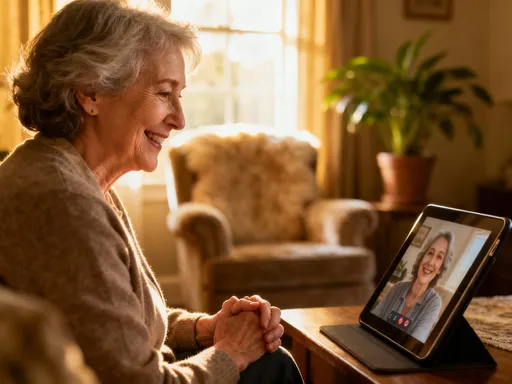
We put a little sticker next to the home button that said "Video Call" with an arrow. I programmed my face into her favorites, so all she had to do was tap one big icon. And you know what? Within a week, she was doing it on her own. No more "How do I start it?" No more fumbling. She’d tap, I’d answer, and suddenly there she was—sitting in her favorite armchair, sunlight through the kitchen window, smiling like I’d just walked in the door.
The beauty of it wasn’t in the technology. It was in the access. For the first time in years, I could see her environment, her energy, her expressions. And she could see mine. It wasn’t about being online. It was about being *present*.
Turning Minutes into Meaningful Moments
At first, our video calls were just quick check-ins. "Hi, Mom, just wanted to see you!" "Oh, hello, dear!" Then I’d wave and hang up. But soon, something shifted. Those few minutes started to feel less like a task and more like a visit. I began noticing things I’d never catch on a phone call. The way she held her cup—wincing slightly as she lifted it. The new flowers on her table. The way her cat kept jumping into her lap during our chats.
One morning, I saw her stand up from the couch and immediately grab the armrest, her face tightening. I paused. "Mom, are you okay?" She brushed it off—"Just stiff, that’s all"—but I could see it wasn’t just stiffness. Later that week, I gently suggested we look at her chair. We adjusted the height, added a cushion, and even moved the lamp so she wouldn’t twist to see her book. Small changes. But they made a real difference.
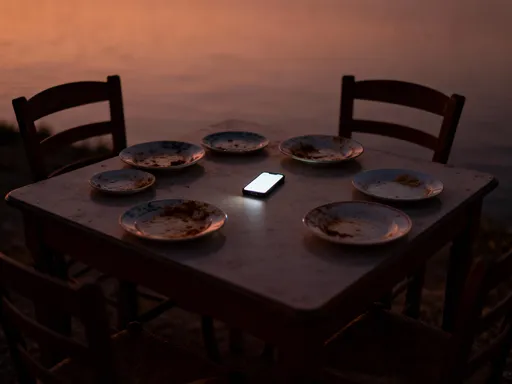
Another time, I noticed she hadn’t set the table for one. "Are you expecting someone?" I asked. She laughed—"No, but I like to pretend I’m hosting!" That simple act told me so much: she was making an effort. She was creating routine. She wasn’t just surviving—she was *living*. And being able to witness that, to celebrate it with her, made me feel less like a worried daughter and more like a connected one.
These weren’t grand moments. No life-or-death discoveries. But they were *real*. They built trust. They gave me peace. And for her, I think they brought joy—the kind that comes from being seen, truly seen, by someone who loves you.
Family Involvement Without the Overwhelm
Before video calls, my sister and I used to play a frustrating game of "Who called Mom today?" Texts flew back and forth: "Did you talk to her?" "No, I thought you did!" It wasn’t that we didn’t care. We both did—deeply. But coordinating care from two different cities, with different schedules and different communication styles, was messy. And Mom? She’d get three calls in one day from us, then none for two days. It wasn’t fair to her.
So we created a simple shared schedule. Just a piece of paper on her fridge: "Monday—Linda (me), 10 a.m. Video call. Wednesday—Sarah (sister), 2 p.m. Chat. Sunday—Family call, 11 a.m." Nothing fancy. But it brought clarity. For us, it meant no more guessing. For Mom, it meant no surprise calls when she was napping or at the store. And for all of us, it meant consistency.
The Sunday family call became our favorite. My nephew, who’s seven, loves to show Grandma his drawings. "Look, Nana, I drew a rocket!" She beams, holding it up to the camera like it’s a masterpiece. My sister’s twins sing little songs. We laugh. We catch up. It’s not a medical check-in. It’s *family time*. And the best part? It doesn’t require anyone to travel. No traffic, no babysitters, no stress. Just connection.
Video calls didn’t replace our in-person visits—they enhanced them. Because now, when I do drive over, I’m not walking into the unknown. I already know how she’s been feeling, what she’s been doing, whether her shoulder’s still bothering her. The visit becomes more meaningful, more focused on joy, not just assessment.
Safety Without Surveillance
I’ll be honest—I worried about this. I didn’t want Mom to feel like she was under surveillance. Like I was checking up on her, judging her, making her feel incapable. That wasn’t the goal. The goal was care, not control. So from the beginning, we made it *her* choice. The calls happen at times *she* agrees to. She decides whether to answer. She can say, "Not now, dear, I’m baking!" and I respect that.
It’s not about constant monitoring. It’s about reliable connection. And because she feels in charge, she’s more open to it. In fact, she started inviting me to "virtual tea"—her words. "Want to have tea with me this afternoon?" she asked one day. I said yes, and for 20 minutes, we sipped our drinks on camera, chatted about the weather, her garden, my work. It wasn’t a check-in. It was a hangout.
That shift—from duty to delight—changed everything. It wasn’t me *managing* her life. It was us *sharing* it. And that made all the difference in how she saw the calls. No longer an obligation, but a pleasure. No longer something she had to endure, but something she looked forward to.
I also disabled any features that felt invasive. No location tracking. No automatic alerts. No background monitoring. Just simple, human connection on her terms. Because dignity matters. And trust matters more.
Beyond the Call: Building Routine and Confidence
What surprised me most wasn’t just how much *I* benefited—but how much *she* did. Video calls became part of her rhythm. She started getting dressed in the morning, not just throwing on a robe. She’d set the table, light a candle, sometimes even put on a little lipstick. "I’m expecting you," she’d say with a smile.
That small act—preparing for our call—gave her a reason to start the day with purpose. It wasn’t just about looking nice for the camera. It was about feeling seen, valued, connected. I began to notice changes: her posture improved. She spoke more clearly. She shared more—about her books, her neighbors, her thoughts. She wasn’t just surviving the day. She was *engaging* with it.
One day, she told me she’d started a small garden on her porch. "I wanted something to show you," she said. And there it was—three little pots with herbs, thriving in the sun. She showed me each one, naming them like they were old friends. That moment wasn’t just about plants. It was about pride. About growth. About life continuing, beautifully, even in the quiet years.
Connection, I realized, wasn’t just easing *my* anxiety. It was lifting *her* spirit. And that was worth more than any app, any gadget, any promise of efficiency.
How You Can Start—Even If You’re Not Tech-Savvy
If I can do this, you can too. You don’t need to be a tech expert. You don’t need the newest phone or a high-speed internet connection. You just need a device—any smartphone, tablet, or even a computer with a camera—and a free video calling app. That’s it.
Start small. Pick a time that works for both of you. Twice a week is plenty at first. Make it low-pressure. Don’t treat it like an interview. Just say, "Hi, I just wanted to see your face!" Let it be light. Let it be fun.
Ask simple questions: "What’s behind you?" "Is that your new sweater?" "What’s that smell—did you bake something?" Let the conversation flow. Share what’s behind *you*, too. Let her see your world. This isn’t about supervision. It’s about *sharing*.
And if the first few calls are awkward? That’s okay. It takes time. Keep showing up. Keep smiling. Keep it consistent. Soon, it won’t feel like caregiving. It’ll feel like being together. And that’s the goal—not perfection, but presence.
More Than a Call—A Lifeline
This journey wasn’t about upgrading technology. It was about deepening love. Video calls didn’t replace in-person visits—they made the distance softer. They gave me clarity. They gave Mom comfort. And they gave us both something precious: time. Not more hours in the day, but *better* ones.
I used to spend three hours a week driving over, just to check on her. Now, I save that time—but I don’t lose the connection. In fact, I have *more* of it. And those saved hours? I use them for things that matter—reading with my kids, cooking dinner, even just breathing. But more than that, I use them with a quieter heart. Because I’m not carrying that constant worry anymore.
Technology gets praised for speed, for efficiency, for innovation. But its true gift? It can give us peace. It can help us care better. It can keep families close, even when life pulls them apart. You don’t need a smartwatch or a voice assistant or a house full of gadgets. You just need one simple tool—video calling—and the willingness to press "call."
So if you’re sitting there, heart heavy with worry, wondering how to stay close to someone you love, I’ll say this: try it. Start small. Be patient. Let it grow. Because sometimes, the most powerful tech isn’t the one that does the most—it’s the one that helps us feel the most. And in the end, that’s what really matters.