From Isolated to Connected: How Video Chat Made Solo Travel Feel Like Coming Home
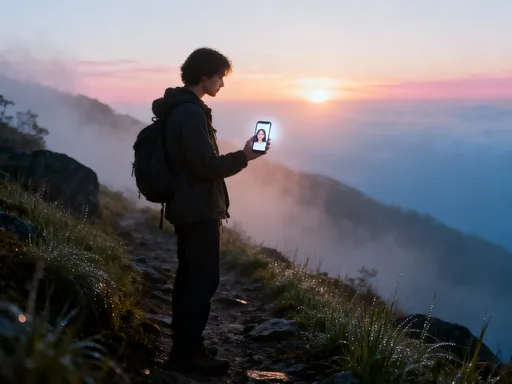
Imagine walking through a quiet mountain village, phone in hand, showing your mom the sunrise over the rice terraces—her laughter filling your ears as if she were beside you. That moment changed everything. Travel used to mean disconnecting, but now, with just a tap, I’m never really alone. Video chat apps have quietly transformed how I experience the world—making solo trips feel warm, safe, and deeply personal. It’s not about escaping life back home; it’s about bringing them along with me, even when I’m thousands of miles away.
The Lonely Side of Solo Travel (And Why We Still Do It)
Solo travel sounds glamorous—freedom to roam, time to reflect, space to breathe. But no one really talks about the silence. The kind that settles in after three days of talking only to strangers at guesthouses or ordering the same meal because you’re too tired to practice the local language again. I remember sitting on a bench in a small coastal town in Portugal, watching the waves, and suddenly feeling a deep ache. Not for anything specific—but for a familiar voice. For someone who knew my laugh, who’d seen me cry, who could say, “You okay?” in a way that meant they truly wanted to know.
I used to think admitting loneliness while traveling was a sign of weakness. Like I wasn’t strong enough to be on my own. So I’d tuck my phone into my bag, avoid calls, and tell myself, “This is what self-discovery feels like.” But it didn’t feel like discovery. It felt like isolation. And the truth is, I wasn’t alone in that feeling. So many women I’ve met on the road—mothers, sisters, daughters—carry the same quiet longing. We want independence, yes, but we don’t want to disappear from the lives we love.
Then something shifted. Instead of seeing connection as a distraction from the journey, I began to see it as part of the journey. A video call wasn’t cheating on solitude—it was honoring my whole self. The part that craves adventure, and the part that craves love. I started calling my sister during train rides, my mom after sunset walks. And slowly, the loneliness didn’t vanish—but it softened. It made space for something warmer: the feeling that I was still part of a story, even when I was writing a new chapter on my own.
The Quiet Revolution: When Video Chat Became My Travel Companion
I didn’t realize how much I’d been missing until that shaky video call from a train in Kyoto. The connection kept cutting out, the screen flickered, and my sister’s voice came in bursts. But when her face finally stabilized and she said, “Oh my gosh, is that bamboo forest?!”—something inside me relaxed. I wasn’t just sending a photo later. She was *there*. She saw what I saw. And for the first time, I didn’t feel like I was collecting memories to show later. I was sharing them as they happened.
That moment wasn’t dramatic. No fireworks, no life-altering decision. But it was a quiet revolution. I realized video chat wasn’t pulling me away from my journey—it was weaving my journey into the lives of the people who mattered most. Unlike text messages that sit unread or photos that get lost in a busy feed, a video call creates presence. It’s not just “I’m okay.” It’s “Look at this light,” “Listen to this music,” “Smell this flower—well, you can’t smell it, but trust me, it’s amazing.”
Over time, these calls became part of my rhythm. Not constant, not intrusive—just intentional. A five-minute call while waiting for a ferry. A quick check-in before dinner. They became anchors, not anchors that held me back, but ones that kept me steady as I moved forward. I wasn’t sacrificing depth for distance. I was deepening the experience by letting others witness it. And in return, their joy, their questions, their simple “I miss you” made the adventure feel more real, more meaningful.
More Than a Call: How Real-Time Sharing Transforms Experiences
There’s a difference between showing someone a photo of a street food stall and video-calling them while you’re standing in front of it. One is a memory. The other is a shared moment. I’ll never forget the time I was on a food tour in Bangkok, and I called my best friend just as the vendor handed me a plate of mango sticky rice. I turned the camera, and she literally screamed. “That’s the one! That’s the one I’ve always wanted to try!” Her excitement didn’t just make me smile—it made me savor every bite differently. I wasn’t just eating dessert. I was eating it *with* her.
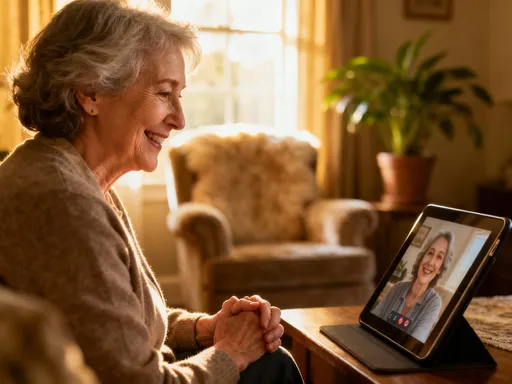
That’s the magic of real-time sharing. It turns observation into participation. When I’m sipping tea in a quiet garden in Kyoto and I call my daughter, she doesn’t just hear about the cherry blossoms—she sees them drift past the camera. She hears the wind chimes. She watches a cat stretch on a stone path. And suddenly, she’s not just hearing a story. She’s in it. And that changes how I experience it too. I notice more. I slow down. I want to show her the little things—the way the light hits the water, the old man feeding pigeons, the smell of incense from a nearby temple.
And it’s not just about the big sights. Sometimes it’s the quiet moments that matter most. Sitting on a balcony in Morocco, watching the call to prayer echo through the hills. Or walking through a market in Vietnam, pointing the camera at piles of bright spices. My mom doesn’t need to be there to feel like she’s part of it. And I don’t need to wait until I get home to share the joy. That immediacy—it connects me not just to people, but to the present. Because when I know someone is seeing what I see, I pay closer attention. I’m not just passing through. I’m living it, and I’m letting them live it with me.
Safety, Comfort, and Confidence: Feeling Protected While Exploring Alone
Let’s be honest—being a woman traveling alone comes with its own set of worries. Not fear, exactly, but a quiet awareness. Is this neighborhood safe? Did I misread that sign? What if I get lost or feel unwell? I used to carry that tension in my shoulders. But now, I carry something else too: the quiet confidence that I’m not truly alone. A quick video call in the morning—just so my sister can see my face, hear my voice—does more than say “I’m okay.” It reassures her. And when she’s at ease, I’m at ease.
I don’t call all the time. But I do check in at predictable moments—after arriving in a new city, before heading out at night, or when I’ve reached a landmark. Sometimes, I’ll do a short live walk, just panning the camera around to show where I am. “See? This is my hotel. The staff is friendly. The street is busy.” It’s not because I don’t trust myself. It’s because I trust connection. And that connection becomes a kind of invisible armor. If something feels off, I know I can call someone instantly—not just to say I’m scared, but to *show* them what’s happening, to get advice, to feel supported.
This doesn’t make me less independent. If anything, it makes me bolder. Because I know I have a soft place to land, I’m more willing to take gentle risks—try a new route, strike up a conversation, stay in a smaller town. Confidence isn’t the absence of fear. It’s the presence of support. And video chat gives me that, without requiring anyone to be physically there. It’s like having a safety net made of love, light enough to carry anywhere, strong enough to hold me when I need it.
Staying Present Without Losing Touch
I get it—some people worry that being connected means being distracted. That if you’re always on your phone, you’re not really *in* the moment. And I used to worry about that too. I didn’t want to be that traveler, head down, filming everything but experiencing nothing. So I learned to set boundaries. No calls during meals unless I’m sharing the moment with someone back home. No video chats while hiking a trail I’ve waited years to walk. My phone goes on airplane mode, and I let the silence in.
But in the in-between moments—the quiet mornings, the train rides, the evenings on a balcony—I let connection in. A five-minute call before bed replaces scrolling through old photos or social media. It’s not avoidance. It’s emotional maintenance. Just like we pack toothpaste and moisturizer, why not pack a little emotional care? Those calls don’t pull me out of the journey. They help me process it. I’ll say, “Today was hard. I got lost. But then this kind man helped me, and I felt so grateful.” And in telling the story, I understand it better. I heal from the small stresses, celebrate the tiny wins.
It’s like journaling, but warmer. Instead of writing words no one sees, I’m sharing feelings with someone who knows my heart. And that helps me stay present *because* I’m not carrying everything alone. I’m not bottling up the hard parts or hoarding the joy. I’m letting it flow. And that makes the journey lighter, brighter. I’m not choosing between being alone and being connected. I’m finding a rhythm where both can coexist—where solitude deepens me, and connection grounds me.
Practical Tips: Making Video Calls Seamless on the Road
You don’t need perfect conditions to stay connected. A little planning goes a long way. First, download offline maps and keep them on your phone—nothing kills a good call like getting lost and realizing you’re in a dead zone. I always carry a portable charger. Not the bulky kind, but a slim one that fits in my day bag. There’s nothing worse than your phone dying right when you’re about to call your kids after a long day.
Use Wi-Fi-friendly apps. Most video chat platforms work better on Wi-Fi, so I wait until I’m at a café, hotel, or public space with a stable connection. If I’m in a remote area, I’ll send a voice message instead—just a quick, “Hey, I’m at the top of the hill, and the view is incredible.” It’s not video, but it’s still me, my voice, my joy.
Schedule short calls at predictable times. I let my family know, “I’ll check in every other night around 8 PM your time.” That way, they’re not worrying, and I’m not feeling pressured to call at odd hours. And I treat my data like luggage—pack light, use wisely. If I’m in a country with expensive data, I buy a local SIM or rely on hotel Wi-Fi. It’s not about being online all the time. It’s about being able to connect when it matters.
And don’t forget sound. If you’re calling from a noisy market or a windy cliff, speak close to the mic or find a quiet corner. A little effort makes the call clearer, warmer. These small habits don’t make you dependent on technology—they make technology serve you. So it feels natural, not stressful. Connection becomes as easy as breathing, not another item on your to-do list.
The Deeper Gift: How Staying Close Helps You Grow
In the end, video chat didn’t just make solo travel easier. It made it richer. I used to think growth meant going it alone, proving I didn’t need anyone. But real growth isn’t about isolation. It’s about expanding your capacity—to explore, yes, but also to love, to share, to be seen. By letting my family and friends into my journey, I didn’t weaken my independence. I deepened my interdependence.
When I shared my fears—the time I got lost in Istanbul, the moment I doubted I could do this trip—I didn’t feel judged. I felt held. When I shared my joys—the sunrise in Santorini, the kindness of a stranger in Nepal—they celebrated with me. And that changed how I returned home. I didn’t just bring back souvenirs. I brought back stories that had already been lived, in part, with the people I love. Our bonds were stronger, not because I stayed close physically, but because I stayed close emotionally.
Solo travel taught me courage. Video chat taught me connection. And together, they taught me balance—the balance between stepping into the unknown and staying rooted in love. That, I’ve learned, is the truest kind of freedom. Not running away, but carrying home with you, in your pocket, in your heart, in every call that says, “I see you. I’m here. You’re not alone.”