More than screen limits: How shared app time brought our family closer
You know that sinking feeling when everyone’s home but no one’s *really* there—just glowing screens and silence? We were stuck in that rut too. Then a friend said, “Try sharing screen time like you share dinner.” Skeptical but desperate, we did. What changed wasn’t just less scrolling—it was more talking, laughing, even playing board games again. This isn’t about strict rules or tech shaming. It’s about using simple tools to reclaim connection. And honestly? It made our days feel lighter, warmer, more *ours*.
The Moment We Realized Screens Were Quietly Taking Over
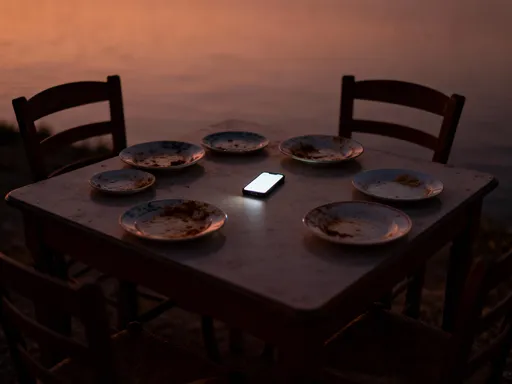
I remember the first time it hit me. We were all sitting at the dinner table—plates full, candles lit, a meal I’d spent an hour preparing. My son poked at his broccoli while glancing at his tablet. My daughter answered a question with 'fine' without looking up from her phone. My partner nodded along to something on a work email, eyes flickering across the screen. And me? I was checking the weather, then the news, then a text, then back again. No one was misbehaving. No one was angry. But no one was really there either.
It wasn’t always like this. There was a time when dinner meant stories—about school drama, new friends, funny things the dog did. We used to play cards after dessert, or pile onto the couch for a family movie with popcorn flying. But slowly, almost invisibly, screens slipped in. Not all at once, not with a bang, but with a whisper. A quick check here, a short video there. Then suddenly, it was the norm: silence, thumbs moving, faces lit by blue light.
I started noticing other little cracks. My daughter used to come straight to me after school, backpack dropped, ready to unload her day. Now she’d say, 'Later, Mom,' and disappear into her room with her headphones on. Weekends blurred into a loop of YouTube videos, gaming marathons, and endless TikTok scrolling. Even our walks to the park turned quiet—everyone wearing earbuds, lost in their own worlds.
One night, I asked my son what he wanted to do for his birthday. He didn’t say trampoline park or pizza night. He said, 'Can I get more screen time?' That broke something in me. Not because he said it, but because I realized I hadn’t offered anything better. We weren’t fighting over tech. We weren’t setting limits. We were just… giving in. And the more I thought about it, the more I saw it wasn’t just the kids. I was doing it too. Scrolling before bed, checking emails during quiet moments, filling every pause with noise from a device. We weren’t bad parents. We weren’t lazy. We were just caught in the current, like everyone else.
Then a friend looked me in the eye and asked, “Are you using your devices, or are they using you?” I didn’t have an answer. But the question stayed. It didn’t feel judgmental. It felt like a mirror. And what I saw wasn’t scary—it was sad. We had all this technology to connect us, but we were becoming more disconnected than ever. That’s when I knew we didn’t need another chore chart or a lecture on digital responsibility. We needed a reset. Not for the kids. For all of us.
A Simple Suggestion That Changed Everything
I met Sarah at a school pickup. We’d chatted before about homework and soccer schedules, but that day, she said something that stopped me mid-sentence. “We started using a screen time app together as a family,” she said, “and it’s been kind of magical.” I laughed at first. “Like, to catch the kids sneaking extra time?” I asked. She shook her head. “No. Not at all. We use it to check in. Like, ‘Hey, you’re at two hours—want to take a break?’ Or ‘I noticed you’ve been on a lot today—everything okay?’ It’s not about control. It’s about care.”
I admit, I was skeptical. I’d tried screen time limits before. Set a timer. Argued when it went off. Felt like the bad guy. The kids resented it. I resented it. And within a week, we’d given up. But Sarah’s approach felt different. It wasn’t about restriction. It was about awareness. It was about doing it *together*. She didn’t say “I monitor them.” She said “we use it.” That small shift in language changed everything.
She told me about the app they used—one that lets each family member see their daily usage, set shared goals, and get gentle reminders. No locking devices. No penalties. Just transparency. “We treat it like our shared grocery list,” she said. “We glance at it, talk about it, adjust as needed. It’s just part of how we stay in sync.”
That night, I brought it up with my partner. Not as a demand. Not as a new rule. Just as an idea. “What if we tried using a screen time app—not to police each other, but to support each other?” He looked up from his phone, paused, and said, “I’ll try anything if it means we actually talk at dinner again.”
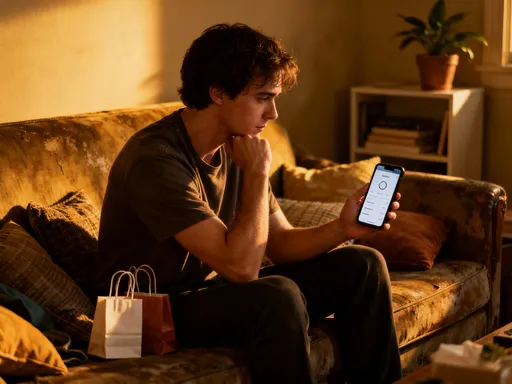
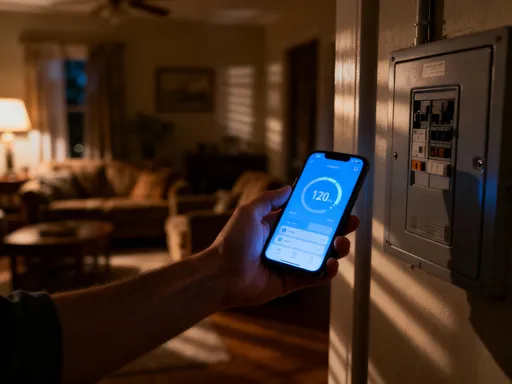
We downloaded a simple, user-friendly app the next day. Nothing fancy. No complex settings. Just a clean dashboard where everyone could see their daily screen time, set personal or family goals, and get soft notifications when they were nearing their limit. We didn’t turn on strict blocking. We didn’t set harsh rules. We just turned it on and agreed to look at it—together—once a day. That small act, that tiny ritual, became the start of something bigger. It wasn’t about tech fixing our lives. It was about using tech to help us remember what mattered.
Starting Small: How We Introduced the Idea at Home
I didn’t call a family meeting. I didn’t make a big announcement. Instead, over pancakes one Saturday morning, I said, “Hey, want to try something fun this week? Let’s all track our screen time—just to see where it goes. No rules. No punishment. Just curiosity.”
My son, who’s ten, looked suspicious. “So you’re gonna spy on us?” I laughed. “No spying. Just sharing. Like how we share the Wi-Fi password. We’ll all be on the same team.” I showed them the app, how it showed colorful charts and daily totals. I let them pick a team name. My daughter shouted, “Team No Scroll!” My son countered with “Mission: Less Scrolling,” and that stuck.
We set our first challenge: “Under Two Hours on Weekdays.” Not because it was the perfect number, but because it felt doable. We agreed to check in every night after dinner—just five minutes. We’d look at the charts, celebrate green days (when we met our goal), and laugh at the red ones. No scolding. No guilt. Just, “Whoa, you were on for three hours? What were you doing?” And more often than not, the answer was, “I didn’t even realize.”
The app sent gentle reminders—like a friendly tap on the shoulder. “You’ve been on for 90 minutes. Time for a stretch?” or “Dinner’s in 10—want to save that video for later?” We didn’t always listen. But the fact that it was there, that it was part of our shared space, made a difference. My daughter started setting her own alerts. “I’ll stop when I hit 1.5 hours,” she’d say. My son used the app to time his gaming—“I’ve got 45 minutes left, so I’ll finish this level and then go outside.”
Even our youngest, who’s six, got into it. She couldn’t read the numbers well, but she loved the color-coded chart. “Green means I did good!” she’d say, pointing proudly. We made stickers for green days. We celebrated with extra story time or a walk to the ice cream truck. It wasn’t about perfection. It was about progress. And slowly, something shifted. The app wasn’t a jail guard. It was a teammate. And we were playing on the same side.
The Unexpected Side Effect: More Time Without Trying Hard
We started this to reduce screen time. But what we didn’t expect was how much more we’d gain. It wasn’t just about cutting down—it was about waking up to how we were spending our days.
The first thing we noticed? Better sleep. My daughter used to stay up late watching videos in bed, even after we told her to put the tablet away. Now, the app shows her screen time winding down in the evening, and she’s more aware. “I’m at 1.8 hours—close enough,” she’ll say, and actually close the app. She’s falling asleep faster. So is my son. So am I. And when we sleep better, we’re kinder, calmer, more present in the mornings.
Then came the conversations. Remember those one-word answers? They started turning into full sentences. At dinner, instead of silence, we’d talk about the day—real talk. “I had a fight with my friend,” my daughter admitted one night. “I’ve been on my phone a lot because I didn’t want to think about it.” That never would’ve come up before. The screen wasn’t just a distraction. It was a shield. And by pulling back just a little, we created space for her to share.
We also rediscovered things we’d forgotten we loved. One evening, my partner said, “I have an idea. Let’s bake cookies.” We hadn’t done that in years. The kids were thrilled. No screens. Just flour, chocolate chips, and laughter. Another weekend, we dug out an old puzzle and spent an afternoon piecing it together. My son said, “This is actually kind of fun.” We started taking evening walks—no phones, no earbuds. Just us, the dog, and the sunset.
The app didn’t give us more hours in the day. But it helped us see where the hours were going. And once we saw it, we could choose differently. We didn’t feel like we were missing out. We felt like we were *gaining* something—time, connection, peace. The best part? No one felt punished. No one felt deprived. It wasn’t about taking things away. It was about making room for what we really wanted.
Tech as a Teammate, Not a Taskmaster
One of the biggest lessons we learned was this: flexibility matters. Life isn’t perfect. Some days, someone’s sick. My daughter had a fever last month and spent the day on the couch watching cartoons. Was I going to stop her? No. She needed comfort. The app showed her screen time spiking, but we didn’t panic. We just said, “That’s okay. You’re healing. We’ll balance it later.”
Or when my son had a big science project due. He needed extra time on the computer for research. We adjusted his daily goal together. “Let’s make it three hours today,” I said. “And tomorrow, we’ll aim for less.” He nodded. “Thanks, Mom. I don’t feel guilty now.” That’s what I love—he didn’t feel guilty. He felt supported.
We also started asking a simple question, sparked by a notification: “Is this helping me feel calm, or just numbing me?” It’s amazing how often we reach for our phones out of habit, not need. Bored in line at the grocery store? Phone out. Feeling stressed? Scroll through social media. But now, that little pause—the reminder, the question—helps us check in with ourselves. Sometimes the answer is, “Yes, this is relaxing.” Other times, it’s, “No, I’m just avoiding something.” And that awareness? That’s powerful.
Tech isn’t the enemy. It’s a tool. And like any tool, it depends on how we use it. We used to let it run the show. Now, we use it to stay in tune. It’s not about rigid rules. It’s about rhythm. Some days are loud. Some are quiet. But we’re learning to move together, as a family, instead of drifting apart.
How Friendships Inspired Real Change
I think about Sarah a lot. She didn’t preach. She didn’t hand me a book or a lecture. She just shared her story—casually, kindly, without pressure. And that made all the difference. It wasn’t about being perfect. It was about trying. And that gave me permission to try too.
Now, I share it with other moms the same way. At school pickup, over coffee, in group chats. Not as an expert. Not as someone who has it all figured out. Just as a mom who found something that helped. “We started using a screen time app together,” I say. “It’s not magic, but it’s helping us feel more connected.”
One couple told me they started weekly family movie nights. They used the app to free up time on weekends—“We cut back during the week so we could really enjoy Friday night together.” Another mom said she and her husband started using it to reduce bedtime phone use. “We used to lie in bed, back to back, scrolling,” she said. “Now we talk. We hold hands. We’re reconnecting.”
It’s not about the app. It’s about the conversation it starts. It’s about giving families a simple way to check in, to care, to choose differently. And the more we talk about it, the more we realize—we’re not alone. So many of us are feeling this. So many of us want to be more present. And sometimes, all it takes is one small nudge from someone who gets it.
Building a Calmer, Closer Home—One Screen at a Time
Looking back, I can see how far we’ve come. We’re not perfect. There are still nights when someone goes over their goal. There are still moments when I catch myself mindlessly scrolling. But the difference is this: we notice. We pause. We choose.
The app didn’t fix everything. But it gave us something priceless—a shared language, a daily ritual, a way to stay connected in a world that pulls us apart. It didn’t take away our devices. It helped us use them with intention. And in doing so, it gave us back something we didn’t even realize we’d lost: each other.
We laugh more now. We listen more. We’re not just sharing a house—we’re sharing a life. And that, more than any number on a screen, is the real victory. So if you’re sitting there, looking at your family, wondering how to bridge the quiet, I’ll say what Sarah said to me: Try sharing screen time like you share dinner. It might just be the small step that leads to the big change. Because it’s not about less tech. It’s about more us.